Common Issues With Disposable Devices & Simple Troubleshooting
Most problems with a disposable device come down to a handful of simple causes: a blocked airflow path, a seal that was never removed, cold liquid, or a battery that's simply run out. Before you write a device off, there are five or six quick checks that fix the majority of issues — no tools, no opening anything up, just a minute of poking around. This guide walks through the common problems Australian buyers run into, what actually causes them, and what you can (and can't) do about each one.
What You Need To Know About Disposable Device Problems
The first thing to understand is that a disposable device is a sealed unit. There's nothing inside to service, and anything beyond the simple external checks below usually means the device has reached the end of its life. That's not a design flaw — it's the trade-off that makes these devices cheap, consistent and maintenance-free.
The second thing: a surprising share of "my device is broken" reports turn out to be one of three things — a silicone stopper still sitting on the mouthpiece, pocket lint blocking the airflow holes on the base, or a device that's been sitting in a cold car overnight. All three take seconds to rule out, and none of them mean the device is faulty. Work through the checks below from top to bottom before assuming the worst.
Key Factors To Consider
No Airflow Or A Very Tight Draw
If the device barely produces vapour, check the airflow holes on the base first. They're small slots, and fabric fibres from a pocket or bag can plug them completely. Blow firmly through the mouthpiece — away from you — and give the base holes a quick wipe. Next, check that any silicone stoppers on the mouthpiece and base were removed before first use; we still hear about this one constantly. If neither helps, the internal airflow channel may have flooded from a leak, which brings us to the next issue.
Gurgling, Leaking Or Liquid At The Mouthpiece
A gurgling sound usually means liquid has pooled near the airflow path. Flick the device downward onto a tissue a few times to clear it, then wipe the mouthpiece. If liquid keeps seeping out, the seal has failed — often after the device sat in a hot car or on its side for weeks. Once a device leaks steadily, stop using it; there's no fixing a failed seal. Our guide on storing devices in Australia's climate covers how to prevent this in the first place.
Burnt Or Harsh Taste
A burnt note means the wick ran drier than the liquid could keep up with — usually after a run of long, fast puffs in a row. Take slower, shorter draws with a pause between them and let the device sit upright for ten minutes; mild cases recover. If the burnt taste is there from the very first puff and never goes away, that unit is faulty and shouldn't be used — take it up with the store you bought it from.
Device Doesn't Activate Or The Screen Stays Blank
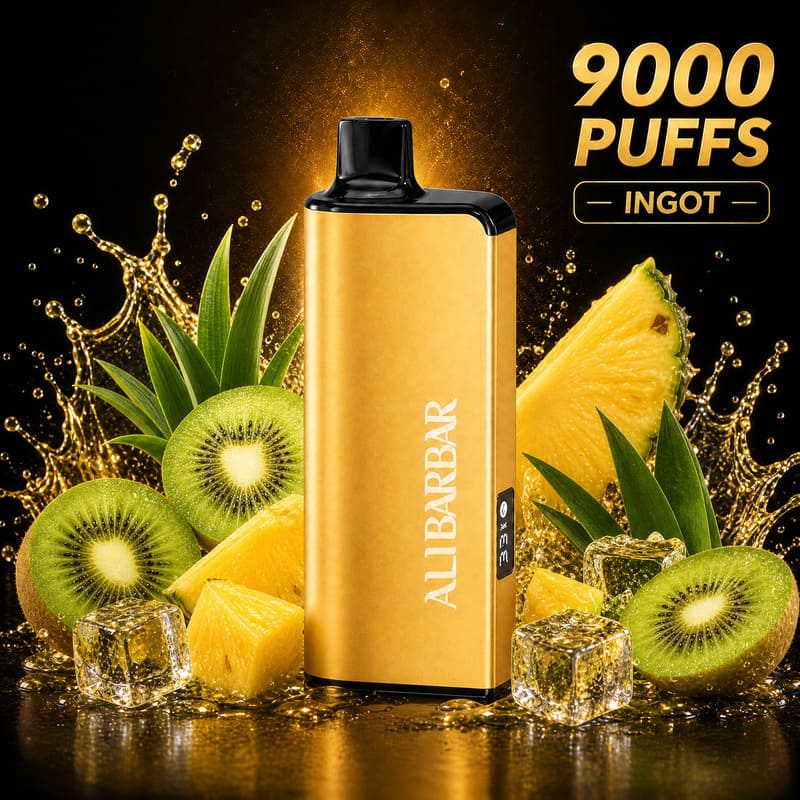
Models with an LED or a screen, like the Ingot 9000, make this easier to diagnose: if the display lights up when you draw, the battery is alive and the problem is airflow; if nothing lights up at all, the battery is flat or empty. Draw-activated devices also cut off on very long puffs as a protection measure — wait a few seconds and try a shorter draw. On dual-tank models like the Action 12K, a weak or silent draw can simply mean the dial is sitting between two tanks; click it firmly to one side.
Device Died Before The Puff Count
This one generates the most complaints, and the honest answer is that rated puff counts are lab numbers, not promises. Real-world results land somewhere around 40–60% of the figure on the box, because puffs vary enormously in length and intensity. A device that stops producing vapour while the tank still has liquid has run out of battery — that's a design limit, not a fault. We break this down fully in our article on why a disposable runs out of power before finishing.
Frequently Asked Questions
Why is my disposable device not hitting at all?
Work through the list: stoppers removed, base airflow holes clear, mouthpiece wiped, a firm draw rather than a gentle sip. Cold devices straight from a car in winter hit weakly too — warm it in your hands for a few minutes. If none of that works and the LED stays dead, the device is out of battery.
Can you actually fix a disposable device?
Only the trivial stuff — clearing airflow, clearing a gurgle, warming a cold device. There is nothing to open, refill or service inside, and prying one open is a bad idea with a battery inside. Beyond the external checks, a dead device is a replacement.
Why does my device taste burnt from the start?
If it's burnt from puff one, the wick wasn't properly saturated at the factory — a faulty unit. A device that only tastes burnt after heavy chain-puffing is different: slow down, pause between draws, and it usually settles.
How do I know if my device is empty or just flat?
On devices with an indicator, draw and watch: a lit display with no vapour means liquid or airflow trouble, a dark display means battery. On basic models, taste is the clue — thin, bland draws usually mean near-empty. Our guide on checking remaining power covers the details model by model.
When should I just replace the device?
Steady leaks, burnt taste that never clears, and a dead battery have no DIY fix. For everyday questions like disposal, our disposable device FAQ for Australia is the better starting point.
Final Tips
Three habits prevent most of the problems above before they happen: pull the stoppers before first use, store the device upright in a cool drawer, and take slower puffs instead of long hard drags. And buy from a store that turns stock over quickly — a fresh unit off a fast-moving shelf has simply had less time to develop the storage-related issues we covered. If you're comparing models before your next order, our guide on how to choose a disposable device in Australia explains which specs actually matter.
Looking for high-capacity multi-option models? Browse our full collection to find your match.