
Disposable Device Battery Life Guide Australia: What Affects Standby Time
Introduction
Short answer: a disposable device's battery life is decided by four things — the size of the battery inside it, how you draw, where you store it, and how much of the rated puff count is marketing. A "9,000 puff" label is a lab number measured with short, gentle draws; real-world use usually lands somewhere between 40 and 60 percent of that. This guide breaks down what actually affects battery life and standby time on the large devices we ship across Australia, using the honest numbers from our own product pages.
What You Need To Know About Disposable Device Battery Life
Every big disposable on the market pairs a battery with a tank of e-liquid, and the whole game is making both run out at roughly the same time. Too small a battery and you're left with liquid you can't use. Too much battery for too little liquid and you're carrying dead weight. That's why comparing devices on the label alone — "9,000 vs 12,000 puffs" — misses half the story.
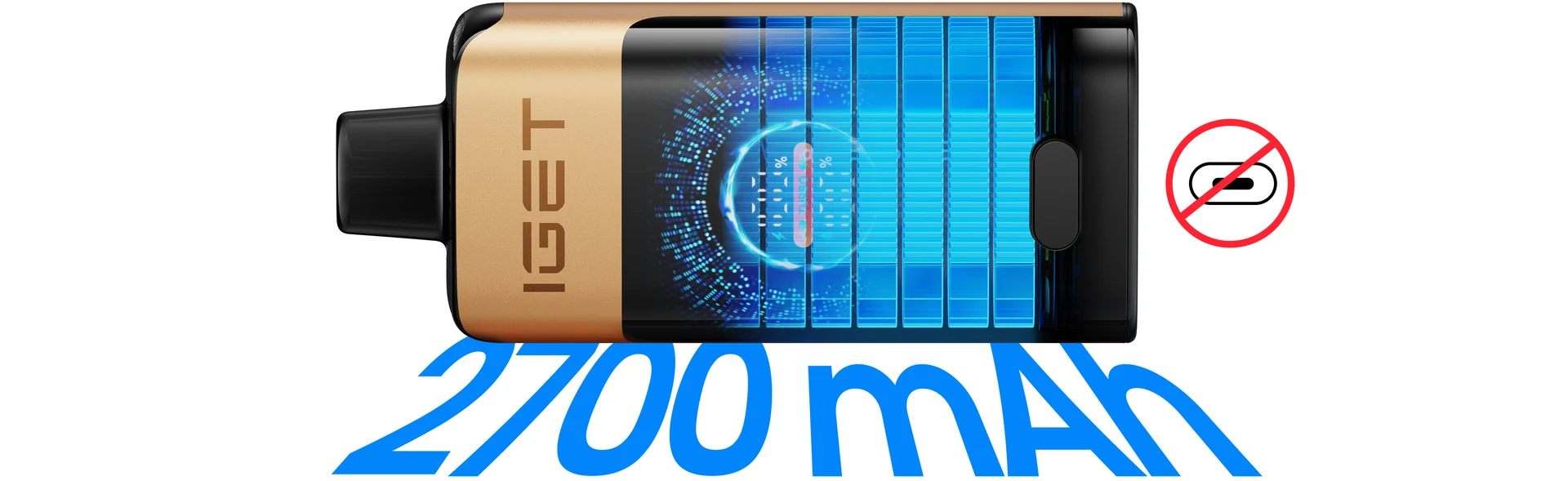
Take the two ends of our range. The Alibarbar Ingot 9000 with its LED screen runs a 2350 mAh TESLA 18650 cell matched to 22 ml of liquid, and it's sealed — no charging, ever. The rechargeable IGET ONE carries a 2700 mAh cell with USB-C, so the battery physically can't be the thing that quits first. Same category, two completely different battery strategies.
One more thing worth knowing up front: modern devices with LED or dot-matrix screens sip such a tiny amount of power to run the display that it's not worth factoring in. What does drain a device sitting in your drawer is plain old self-discharge — every lithium cell loses a small percentage of charge per month on its own, faster in heat. That's "standby time", and it's measured in weeks and months, not days.
Key Factors To Consider
1. Battery capacity (mAh) — useful, but only half the number
Milliamp-hours tell you how much energy the cell holds, and all else being equal, bigger is longer-lasting. The Ingot 9000's 2350 mAh cell is factory-sized to outlast its 22 ml of liquid without ever needing a cable. The IGET ONE's 2700 mAh goes further, but only because it can be topped up — run it in Turbo mode and you'll burn through charge roughly a third faster, which is exactly why it offers 12,000 puffs in Regular mode but around 9,000 in Turbo. If a product page doesn't publish the mAh at all (some don't), treat that as a question worth asking before you buy.
2. Your draw style — the biggest variable nobody talks about
Puff ratings assume a one-second-ish, gentle draw at room temperature. Take long, slow two-to-three-second draws, chain-vape on a hot afternoon, or run a boost/turbo mode, and you'll chew through both battery and liquid noticeably faster. Two people with the same device can easily see a 30–40% difference in how long theirs lasts. There's nothing wrong with long draws — just budget for them instead of trusting the box.
3. Temperature and storage — the Australian summer tax
Lithium cells self-discharge faster in heat, and sustained high temperatures age the cell permanently. A device left in a car glovebox in Perth in February or on a sunny windowsill in Brisbane will come back to you with measurably less runtime than one kept in a cool, dry drawer. If you're stocking up, keep spares somewhere room-temperature and out of direct sun — it's the single cheapest way to protect battery life you've already paid for.
4. Screens and honest tracking
A real-time display — like the Ingot's LED readout of remaining puffs and battery level — barely affects runtime, but it changes how you use the device. Instead of guessing when it's done, you can see the actual trend and plan a replacement before it dies mid-week. We consider a screen on any large-capacity device close to essential for that reason alone.
Frequently Asked Questions
How long does a 9,000 puff disposable actually last?
Plan on roughly 40–60% of the rating in real use, so call it 3,600–5,400 puffs. For a light user doing 80–100 draws a day that's five to nine weeks; a heavier user will finish it in two to three. Days-per-device is personal — the honest math is (rated puffs × 0.4–0.6) ÷ your daily usage.
Does a disposable lose charge while not in use?
Yes, but slowly. Self-discharge for a healthy lithium cell is a few percent a month at room temperature, quicker in heat. A device stored for a month will still be close to full; one forgotten in a hot car for a summer will not. Cool, dark, dry storage is all it takes.
Are rechargeable devices better for battery life?
For runtime, yes — a USB-C device like the IGET ONE removes the classic failure mode where the battery dies with liquid still in the tank. It doesn't make the liquid last longer or fix an ageing coil, it just makes sure you get to use everything you paid for.
Why does my device taste burnt even though the battery still shows charge?
That's the coil or the liquid, not the battery. A display showing remaining charge doesn't mean the wick is still in good shape. If the flavour drops off or turns harsh while the screen still shows power, the device is functionally finished even though the battery isn't empty.
Final Tips
- Check the published mAh before you buy, and prefer devices that publish it.
- If battery anxiety is the thing you hate most, go rechargeable — start with the IGET ONE's 2700 mAh cell.
- Trust the 40–60% real-world rule, not the label.
- Store spares cool and dry; never in a parked car.
- Prefer a screen so you're tracking, not guessing.
If you're weighing up which big device actually fits your habits, our guide to choosing a disposable vape in Australia walks the full checklist.
Looking for high-capacity multi-option models? Browse our full collection to find your match.
18+ only. Nicotine is addictive. All products are sold in accordance with Australian regulations.